


Issue No. 30 | Monday, November 9, 2026
Good morning,
Welcome to The Science Diplomat Playbook, your Monday morning guide to what’s shaping the week ahead in global science diplomacy.
The lead
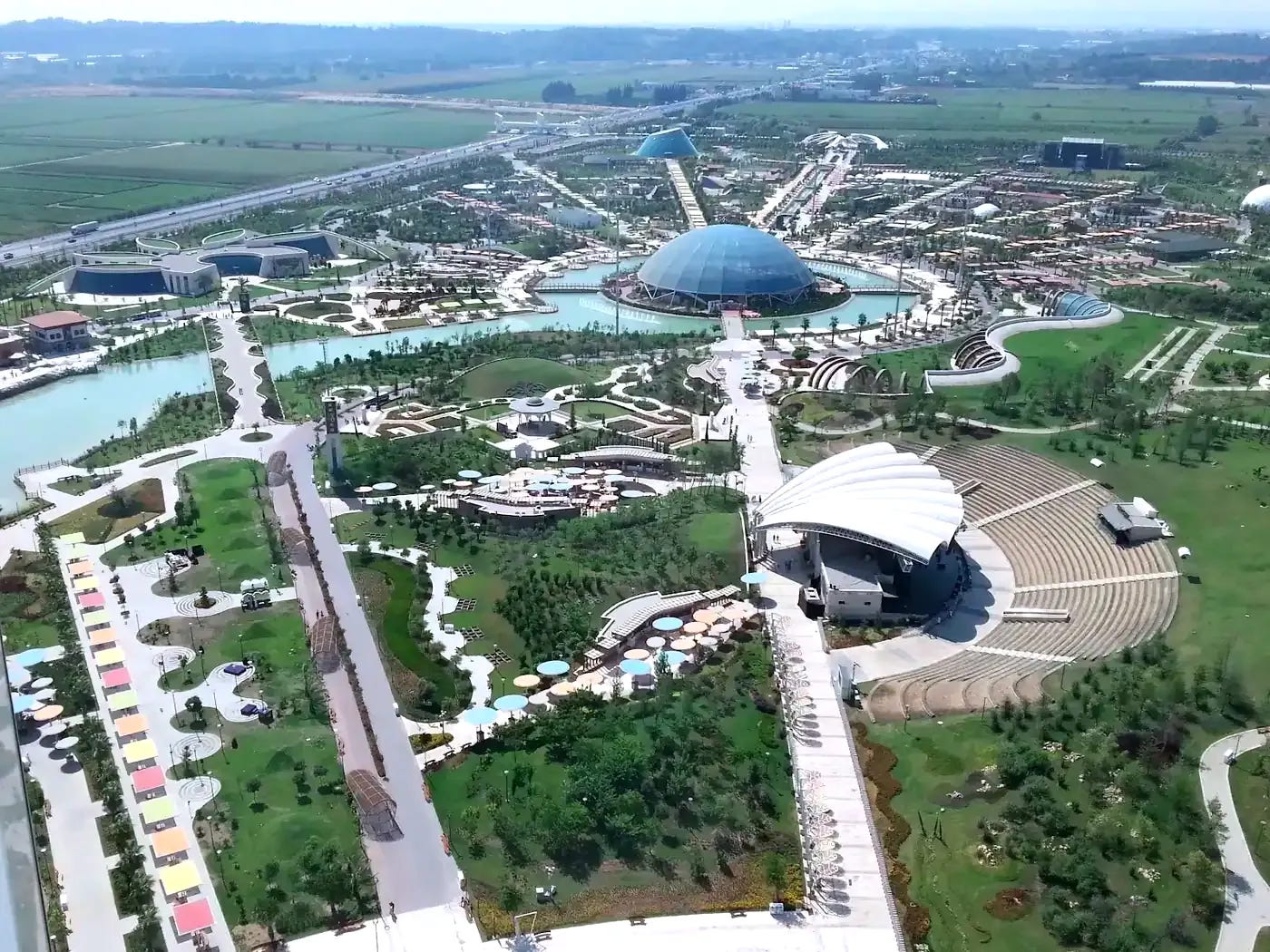
Two weeks of U.N. climate negotiations begin Monday in Antalya, Turkey, with governments facing renewed pressure to turn climate commitments into implementation, finance and measurable progress. COP31 opens amid an energy crisis driven by the war involving Iran and disruptions to shipping through the Strait of Hormuz, sharpening the debate over fossil fuels, energy security and the transition to cleaner technologies.
The summit’s unusual leadership arrangement puts Turkey in charge of the presidency and voluntary action agenda, with Australia leading formal negotiations. The Trump administration will be absent. A World Leaders’ Summit on November 11–12 will bring political attention to talks that depend heavily on scientific assessments, emissions data, technical expertise and the capacity of governments to implement their commitments.
Meanwhile, Paris hosts an unusually concentrated series of science diplomacy meetings. The Foreign Ministries Science & Technology Advice Network (FMSTAN) marks its tenth anniversary Monday, followed Tuesday by UNESCO’s fourth Chief Science Advisors Roundtable. The Paris Peace Forum also opens Tuesday, bringing questions of technological competition, international cooperation and global governance into a broader diplomatic setting.
The Science Diplomat will report from the Paris meetings, where debates over scientific advice, trust and the changing relationship between research and foreign policy offer a parallel perspective on the challenges confronting international cooperation.
Major Processes
COP31 opens climate negotiations in Antalya
November 9–20 | Antalya, Turkey
The 31st Conference of the Parties to the U.N. Framework Convention on Climate Change opens Monday, bringing governments together to negotiate the implementation of international climate commitments.
Climate finance, adaptation, emissions reductions and a just transition are among the central issues. Developing countries are expected to press for financial and technical support that would allow them to strengthen resilience and pursue lower-emissions development, while negotiations will test how governments translate previous agreements into action.
Turkey is hosting the conference, with Murat Kurum nominated as COP31 president and Australia’s Chris Bowen serving as President of Negotiations.
The opening week’s agenda includes Earth Information Day, discussions of climate transparency and reporting capacity, and work on international cooperation under Article 6 of the Paris Agreement. The World Leaders’ Summit on November 11–12 will provide a political focal point before negotiations continue into the second week.
What to watch: Whether governments make progress on the financing and technical capacity needed for implementation, and whether scientific evidence and emissions reporting translate into more credible national action.
Sources: UNFCCC COP31 | COP31 sessions | COP31 schedule
FMSTAN marks a decade of foreign ministry science advice
November 9 | Paris, France
The Foreign Ministries Science & Technology Advice Network marks its tenth anniversary Monday with a symposium at UNESCO headquarters examining how science diplomacy must adapt to a changing international environment.
The meeting, Reinventing Science Diplomacy in a Changing World, brings together foreign ministry science advisers, scientists and representatives of international institutions to consider the growing intersection of scientific cooperation, national security, technological competition and geopolitical rivalry.
Since FMSTAN’s establishment in 2016, science and technology’s prominence in foreign policy has continued to grow. Artificial intelligence, research security, critical minerals and strategic technologies have complicated the traditional assumption that scientific cooperation can remain insulated from political tensions.
The symposium offers an opportunity to examine how foreign ministries are adapting their advisory systems and international partnerships, and whether science diplomacy can preserve channels of cooperation when relations between governments deteriorate.
What to watch: Whether participants identify practical changes in the way foreign ministries obtain scientific advice, manage research partnerships and engage with countries whose technological and strategic interests differ.
Source: UNESCO — FMSTAN anniversary symposium
Chief science advisers examine trust and competing knowledge
November 10 | Paris, France
UNESCO and South Africa, with support from India, convene the fourth Chief Science Advisors Roundtable on Tuesday to examine how governments can obtain credible advice in a complex information environment.
Meeting under the theme Trusted Advice in a World of Plural Knowledge, the roundtable will consider how advisory systems incorporate expertise from universities, civil society, Indigenous and local knowledge holders, international organizations and emerging technologies without compromising transparency or accountability.
The morning program includes discussions on who determines the questions put to scientific advisers, how governments evaluate uncertainty and how artificial intelligence is changing the production and interpretation of evidence. Participants include senior government science advisers and representatives of international scientific and policy institutions.
A closed afternoon session will allow chief science advisers and their equivalents to exchange national experiences and discuss priorities. A draft chair’s summary is scheduled for presentation before the meeting concludes.
The roundtable follows FMSTAN’s anniversary symposium, creating a two-day examination of the relationship between science, government decision-making and diplomacy.
What to watch: Whether advisers can identify workable standards for assessing competing evidence and expanding participation in science advice, and whether the meeting produces proposals for stronger cooperation among national advisory systems.
Source: UNESCO — Fourth Chief Science Advisors Roundtable
Paris Peace Forum examines technological power and cooperation
November 10–11 | Paris, France
The Paris Peace Forum opens Tuesday with a program addressing international governance challenges that increasingly depend on scientific and technological expertise.
Sessions relevant to science diplomacy include the concentration of artificial intelligence capabilities, cooperation between countries with unequal access to technological infrastructure, climate resilience, cyber risks, ocean governance and the distribution of benefits from the energy transition.
The program also includes discussions of critical minerals and the investment and governance decisions shaping their extraction and processing. These questions intersect with growing efforts by resource-rich countries to secure scientific capacity, industrial development and a greater role in international technology partnerships.
What to watch: Concrete proposals for widening access to AI capabilities, governing emerging technologies across borders and giving developing countries greater influence over decisions involving their resources and scientific futures.
Source: Paris Peace Forum — 2026 program
WHO pandemic negotiations continue in Geneva
Through November 13 | Geneva, Switzerland
Negotiations on the pathogen access and benefit-sharing system under the WHO Pandemic Agreement continue in Geneva, with the current meeting scheduled to conclude Friday.
The proposed system is intended to establish arrangements for sharing pathogens and associated information while providing access to benefits arising from their use, including vaccines, diagnostics and therapeutics.
The negotiations confront a persistent divide in global health diplomacy: how to ensure rapid international access to information needed to respond to outbreaks while giving countries that provide pathogen samples and data equitable access to resulting medical products and technologies.
The annex is intended for consideration by the World Health Assembly in May 2027, making the current negotiations an important stage in translating the pandemic agreement into operational arrangements.
What to watch: Whether governments narrow disagreements over access, benefit sharing and implementation, or leave fundamental questions unresolved for subsequent negotiations.
Source: World Health Organization — Pandemic Agreement
Security Council Watch — Technology and peacekeeping
The Security Council’s Working Group on Peacekeeping Operations meets Friday to examine how technology could help U.N. missions carry out their mandates. Officials from the U.N. Department of Peace Operations and its mission in the Democratic Republic of the Congo are expected to brief members.
The discussion comes as Council members continue negotiating a Danish proposal to strengthen protection for medical personnel and facilities in conflict.
Elsewhere, the Council votes Thursday on renewing peacekeeping mandates in the Central African Republic and Abyei, along with sanctions on Yemen. On Friday, Bahrain has requested a briefing on Gulf tensions, including threats to maritime security and shipping through the Strait of Hormuz.
Sources: Security Council Report — November 2026 Monthly Forecast | U.N. Security Council provisional program of work, November 2026
Signals
Science advice takes the spotlight as a diplomatic agenda. The consecutive FMSTAN and UNESCO chief science advisers’ meetings put the organization of scientific advice itself under international scrutiny. Their discussions may reveal whether governments are converging on shared principles or developing increasingly different approaches to the relationship between science and state power.
Climate implementation tests scientific capacity. COP31’s technical agenda underscores that climate diplomacy depends not only on political commitments but also on emissions inventories, monitoring systems, modeling expertise and institutions capable of evaluating progress. Unequal access to these capabilities remains a practical challenge for international implementation.
Open science enters the Paris conversation. UNESCO lists a Conference on Open Science for Innovation for November 12, following the FMSTAN and chief science advisers’ meetings. The gathering offers another opportunity to examine how international scientific openness can be maintained amid growing pressure to protect strategically important research.
Calendar
Monday, November 9: COP31 opens in Antalya. FMSTAN holds its tenth anniversary symposium at UNESCO in Paris. Falling Walls Science Summit concludes in Berlin. WHO Pandemic Agreement negotiations continue in Geneva.
Tuesday, November 10: UNESCO convenes the fourth Chief Science Advisors Roundtable in Paris. The Paris Peace Forum opens. World Science Day for Peace and Development is observed.
Wednesday, November 11: COP31 World Leaders’ Summit begins in Antalya. Paris Peace Forum concludes.
Thursday, November 12: COP31 World Leaders’ Summit concludes. UNESCO’s Conference on Open Science for Innovation takes place in Paris.
Friday, November 13: The current WHO Pandemic Agreement negotiating meeting concludes in Geneva. COP31 completes its first week.
Looking ahead: COP31 continues through November 20, with negotiations expected to intensify as the conference approaches its conclusion.
Closing
You’re reading The Science Diplomat Playbook, a weekly briefing mapping the institutions, technologies and governance systems shaping international cooperation.